# Setting up HTTPS access to Plakar Control Plane on a Scaleway Private Network
Scaleway VPC allows you to build your own Virtual Private Cloud on top of
Scaleway's shared public cloud. Within each VPC, you can create Private Networks
and attach Scaleway resources to them, as long as the resources are in an AZ
within the network's region. Attached resources can then communicate between
themselves in isolated and secured networks, away from the public internet. The
routing feature allows the different Private Networks of a VPC to communicate
with each other.
In this guide, we will set up Plakar Control Plane (PCP) on a Scaleway Private
Network and expose it securely over HTTPS. To do so, we will:
1. Create a VPC and a Private Network within it
2. Add a Public Gateway to the network so PCP can reach the internet
3. Attach the PCP instance to the Private Network
4. Create a Load Balancer and attach it to the Private Network
5. Configure the Load Balancer to route traffic to PCP
6. Generate and attach an SSL certificate to the Load Balancer
{{< mermaid >}}
flowchart TD
User["User / Browser"]
DNS["Domain name"]
subgraph Scaleway["Scaleway"]
LBFrontend["Load Balancer Frontend
HTTPS :443
SSL certificate"]
subgraph VPC["VPC"]
subgraph PN["Private Network"]
LBBackend["Load Balancer Backend
HTTP :80"]
PCP["PCP Instance
No public IP"]
Gateway["Public Gateway
Outbound internet access"]
end
end
Internet["Internet
Updates, external services"]
end
User --> DNS
DNS --> LBFrontend
LBFrontend --> LBBackend
LBBackend --> PCP
PCP --> Gateway
Gateway --> Internet
LBBackend -. "Health check
GET /login
Expected 200" .-> PCP
{{< /mermaid >}}
## Step 1: Create a VPC and a Private Network
In the Scaleway console, navigate to **Network** > **VPC** in the left sidebar.
Click **Create VPC**, select a region, and give it a name.
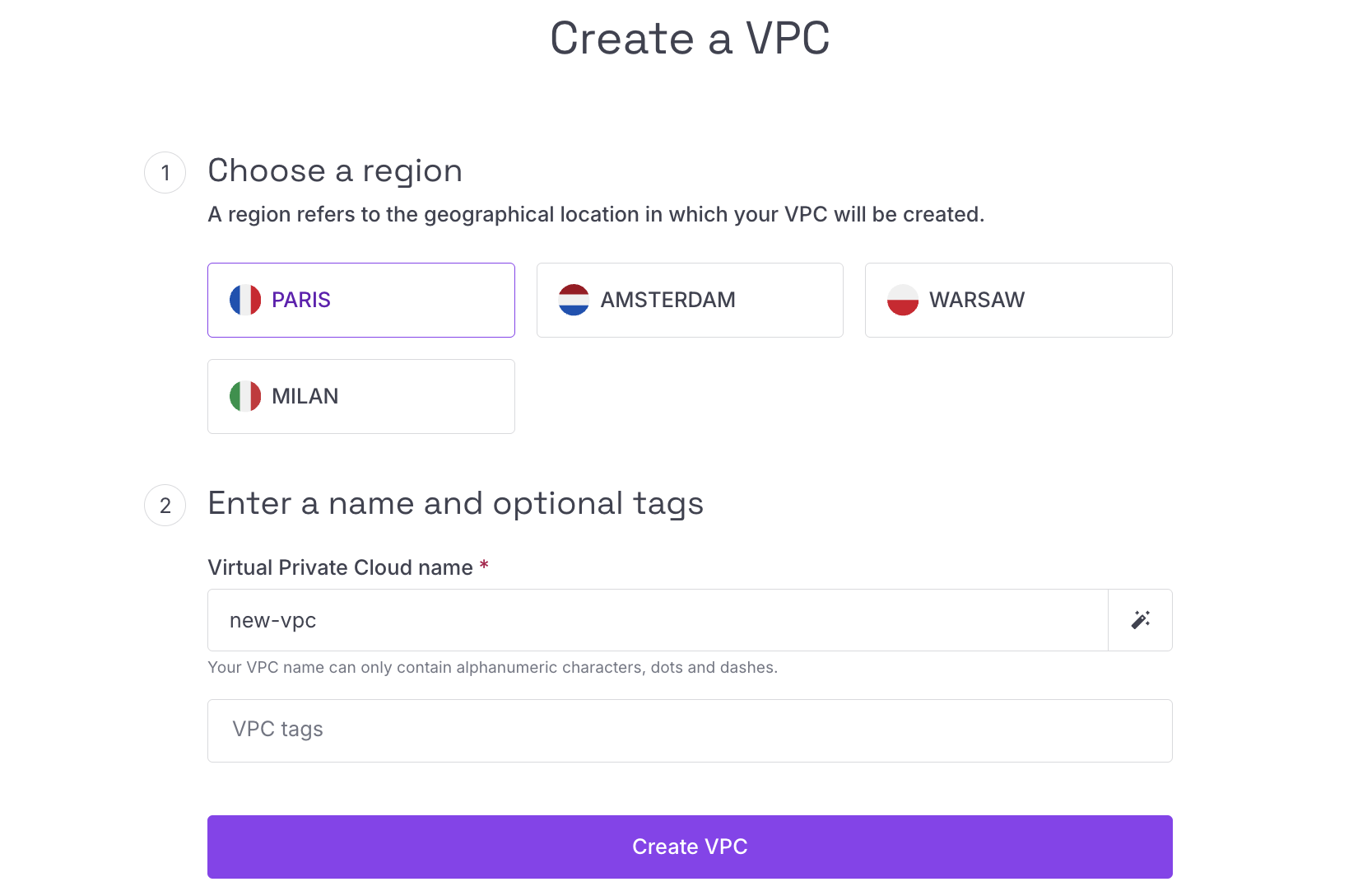
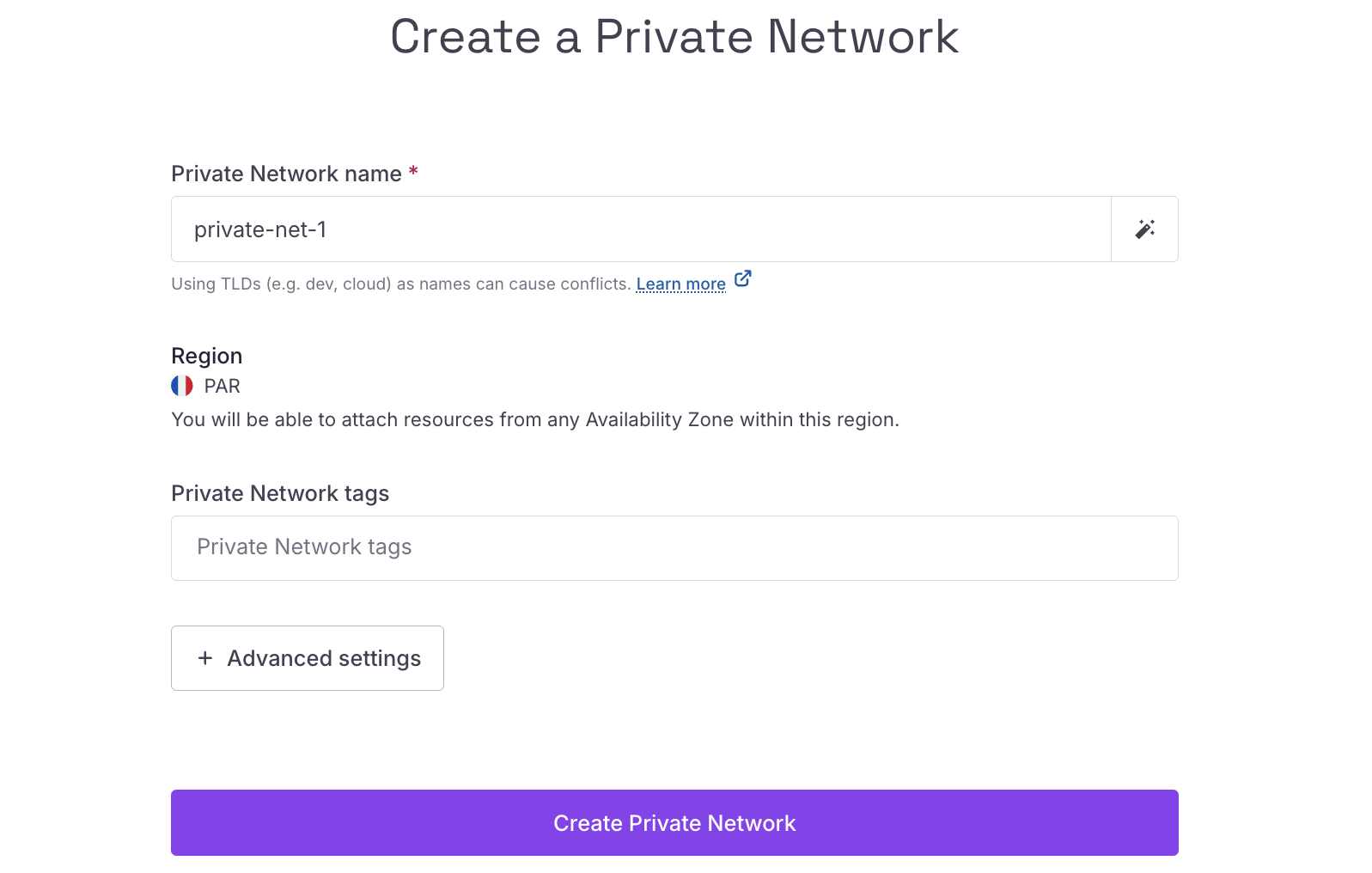
Once the VPC is created, open it and go to the **Private Networks** tab. Click
**Create private network** and provide a name. No additional configuration is
required at this stage.
## Step 2: Create a Public Gateway and attach it to the Private Network
In the Scaleway console, navigate to **Network** > **Public Gateways**. Click
**Create public gateway** and configure the following:
- **Zone**: select the zone that matches your Private Network
- **Bandwidth**: choose a gateway bandwidth tier
- **IP**: select **Allocate new IP** to assign a fresh public IP to the gateway
- **Name**: give the gateway a name
Once the gateway is created, open it and go to the **Private Networks** tab.
Click **Attach to a private network**, select the Private Network created in
[Step 1](#step-1-create-a-vpc-and-a-private-network), and configure the
attachment:
- **Advertise default route**: enable this so that other resources on the
Private Network learn the default route through the gateway, allowing them to
reach the internet
- **Private IPv4 address**: leave this set to auto-allocate an available IP from
the pool
{{< figure src="../images/attach-scaleway-gateway-to-private-network.png" class="mx-auto max-w-130" >}}
If you ever replace this gateway with a new one, make sure **Advertise default
route** is enabled on the new gateway's attachment to the Private Network.
Resources on the network learn the default route via DHCP, so after switching
gateways, reboot the PCP instance to pick up the new route.
## Step 3: Attach the PCP instance to the Private Network
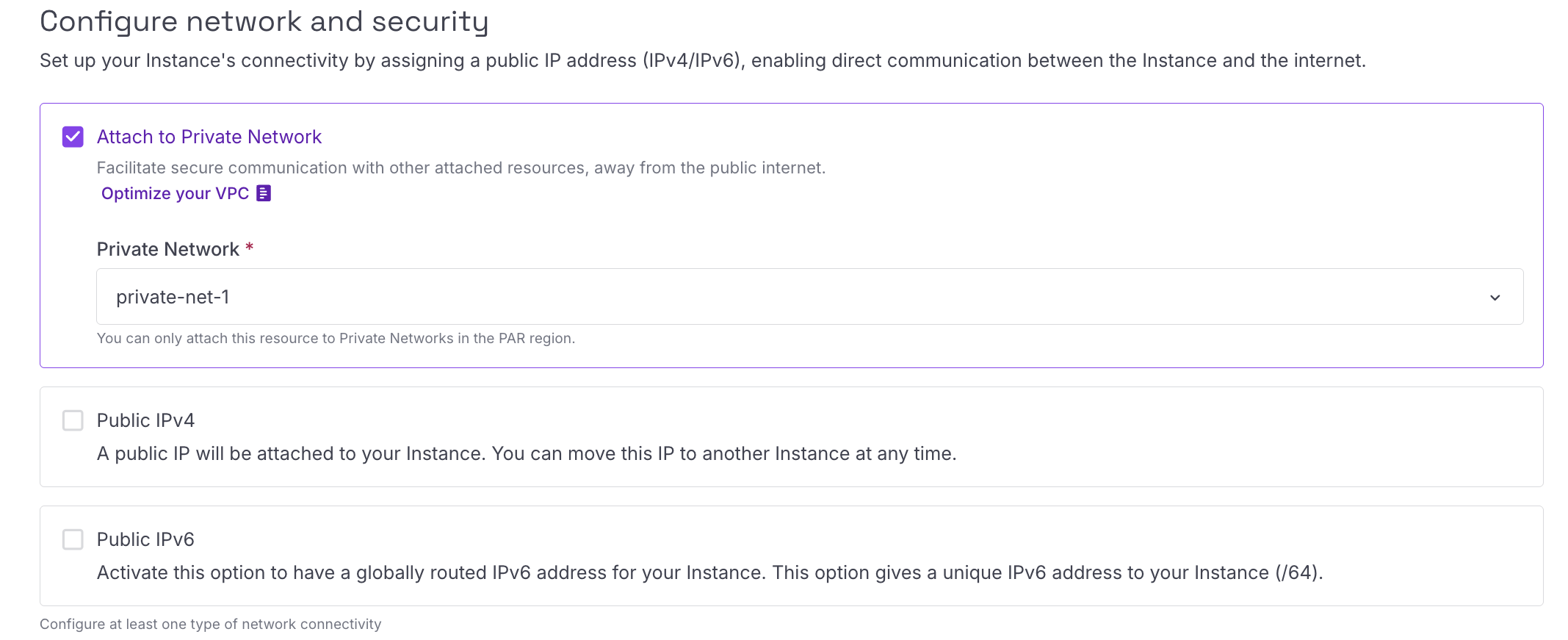
If you have not yet created your PCP instance, follow the
[Scaleway installation guide](../../intro/installation/scaleway). When creating
the instance, do not assign a public IPv4 or IPv6 address to it. The Public
Gateway set up in
[Step 2](#step-2-create-a-public-gateway-and-attach-it-to-the-private-network)
will provide internet access. You can also attach the instance to the Private
Network directly during instance creation.
If your instance already exists, open your VPC in the Scaleway console, navigate
to the Private Network created in
[Step 1](#step-1-create-a-vpc-and-a-private-network), and click **Attach a
resource**. Set the resource type to **Instance**, select your PCP instance, and
leave both **Private IPv4 address** and **Private IPv6 address** set to
auto-allocate from the pool.
{{< figure src="../images/attach-instance-to-private-net.png" class="mx-auto max-w-130" >}}
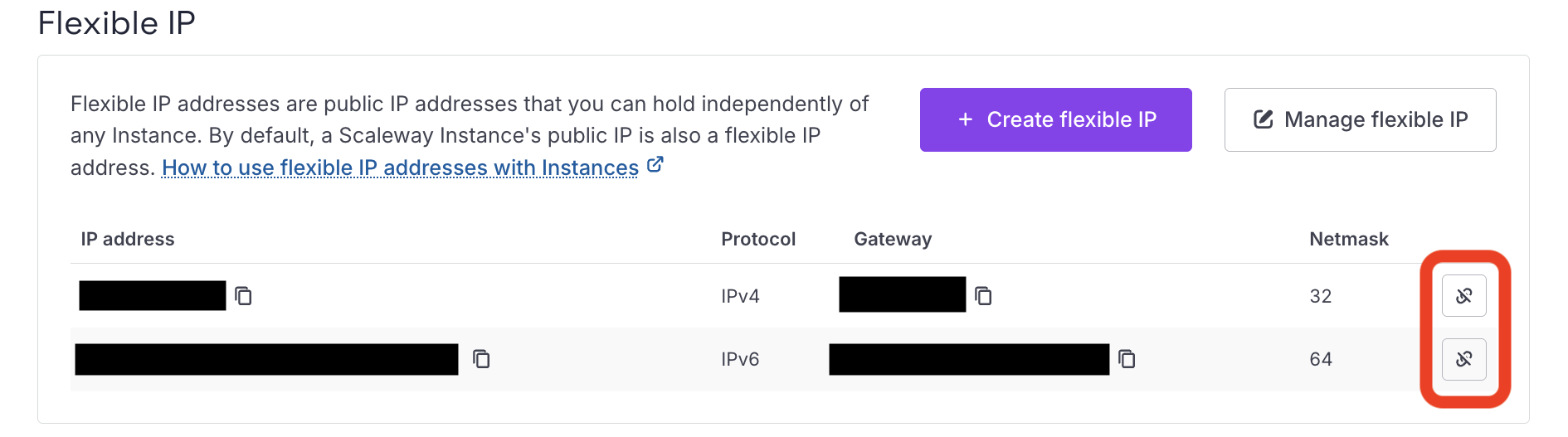
If your existing instance has a public IP attached, you can detach it from the
instance details page under the **Flexible IPs** section.
## Step 4: Create and configure the Load Balancer
### Create the Load Balancer
In the Scaleway console, navigate to **Network** > **Load Balancers** and click
**Create load balancer**. Configure the following:
- **Zone**: select the zone matching your Private Network
- **Bandwidth**: choose a bandwidth tier
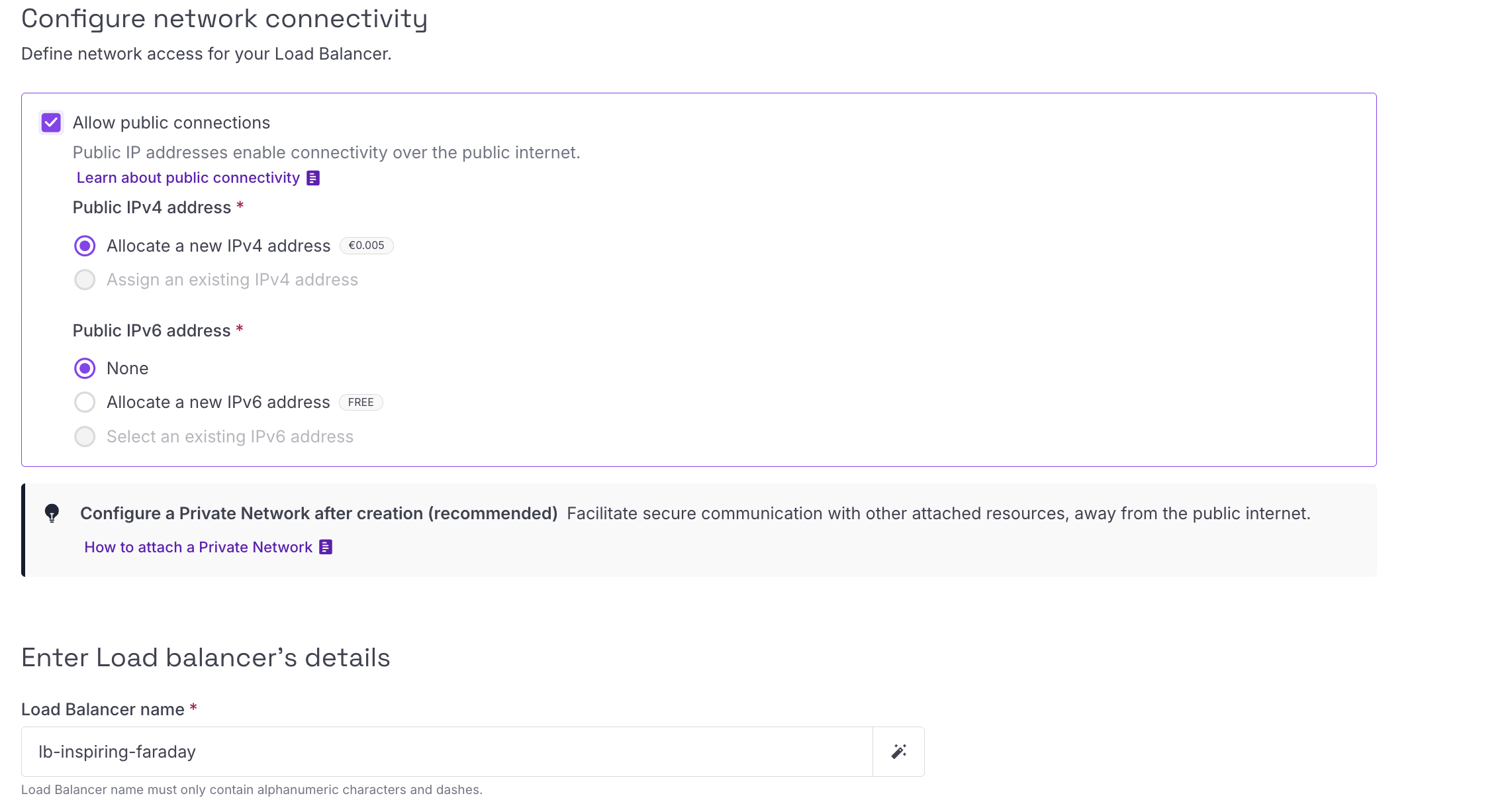
- **Network connectivity**: enable **Allow public connections** and assign a
public IPv4 address. IPv6 is not required
- **Name**: give the Load Balancer a name
When prompted for quick setup, skip it. We will configure everything manually.
### Attach the Load Balancer to the Private Network
Open the Load Balancer and go to the **Private Networks** tab. Click **Attach to
a private network**, select the Private Network from
[Step 1](#step-1-create-a-vpc-and-a-private-network), and leave **Private IPv4
address** set to auto-allocate from the pool.
### Add a backend
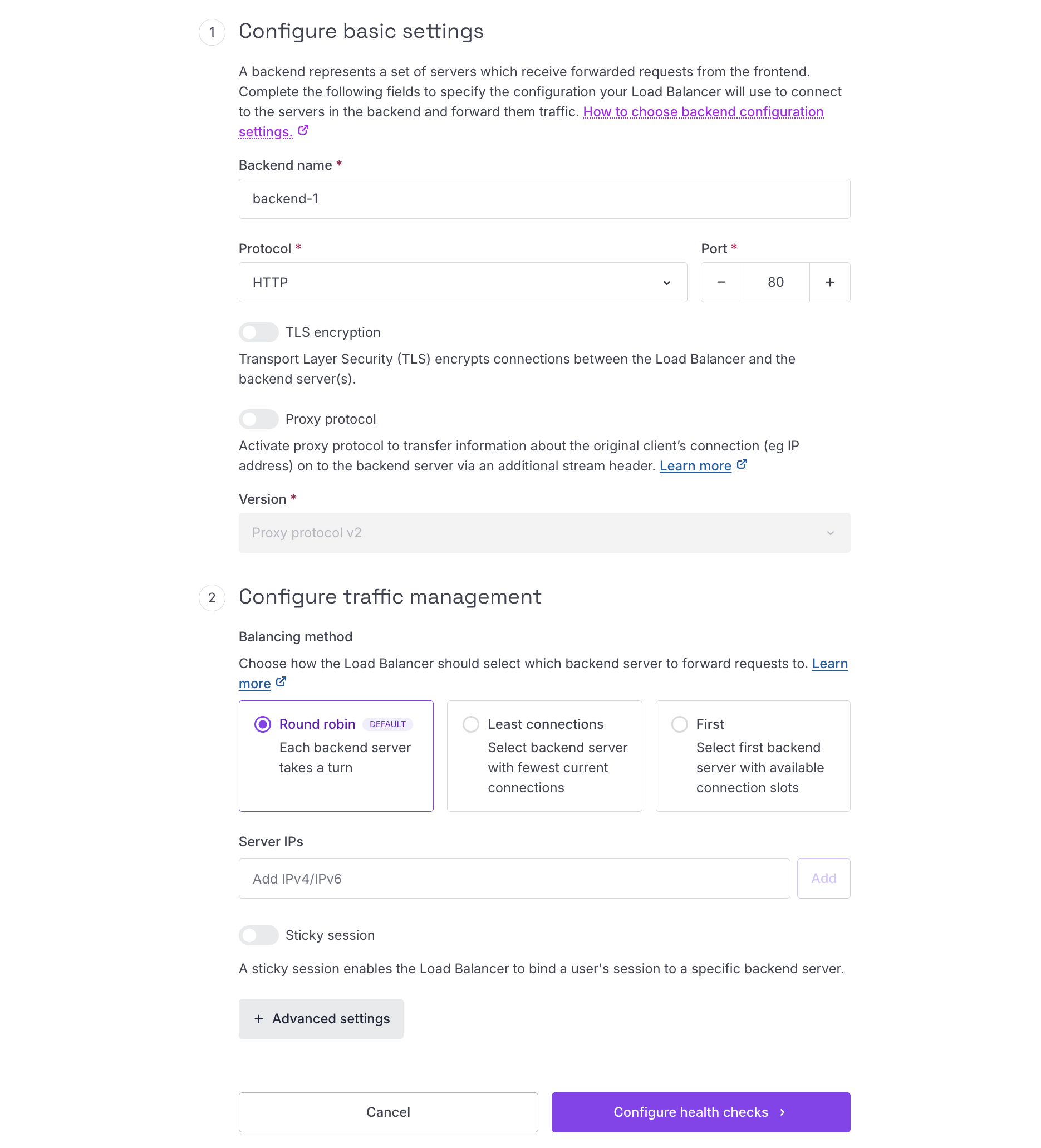
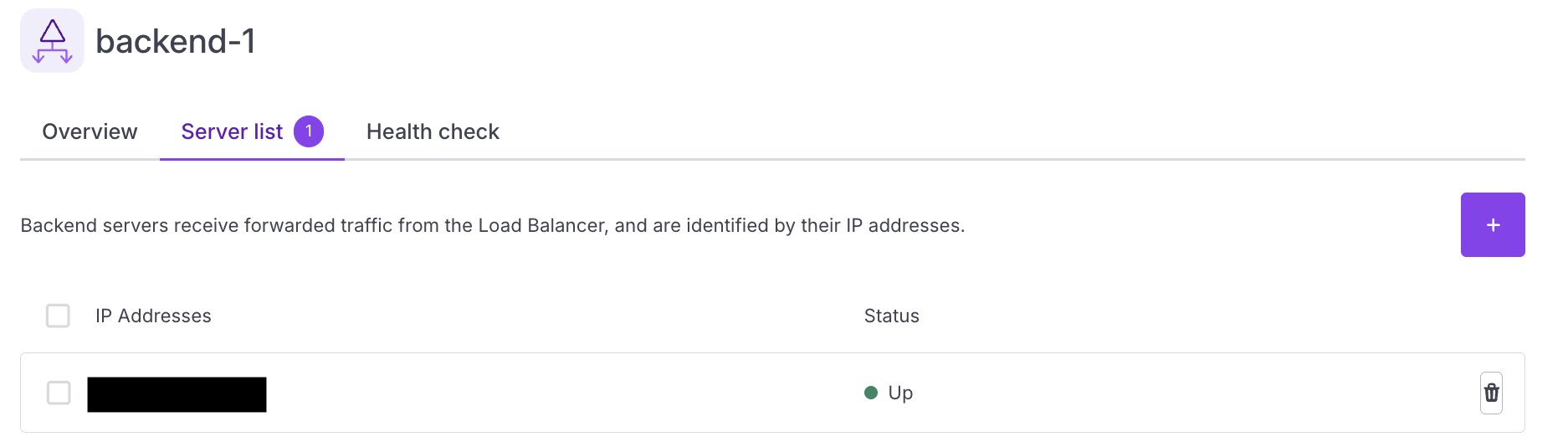
Go to the **Backends** tab and click **Add backend**. Configure the following:
- **Name**: provide a name for the backend
- **Protocol**: HTTP
- **Port**: 80
- **TLS encryption**: leave disabled. PCP does not use HTTPS internally and the
Private Network provides sufficient isolation
- **Proxy protocol**: leave disabled
- **Balancing method**: choose your preferred method (Round robin, Least
connections, or First)
- **Sticky session**: enable if needed, disabled by default
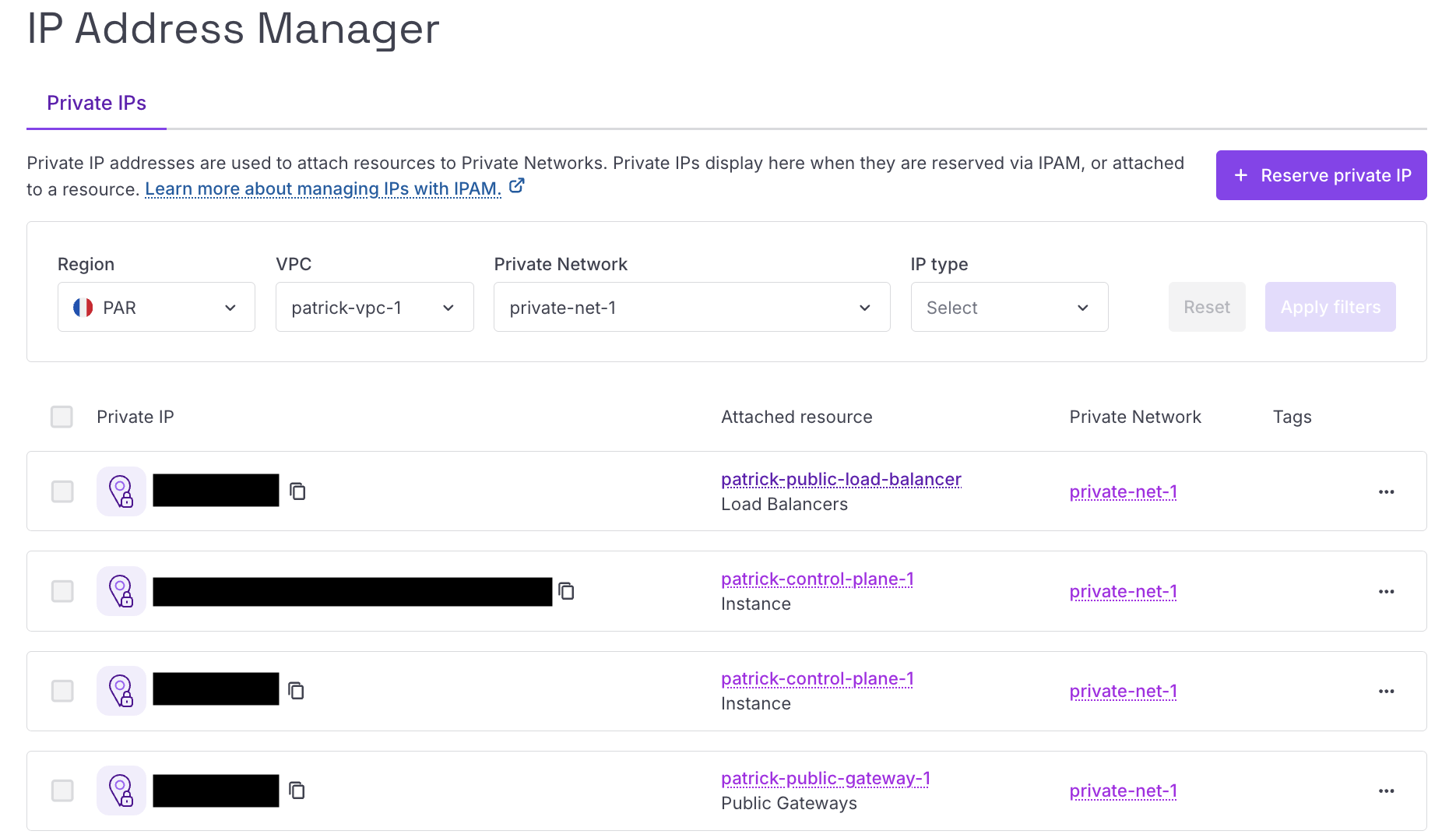
To add your PCP instance as a backend server, you need its private IP address.
Navigate to **Network** > **IPAM** to find it, then enter it under **Backend
servers**.
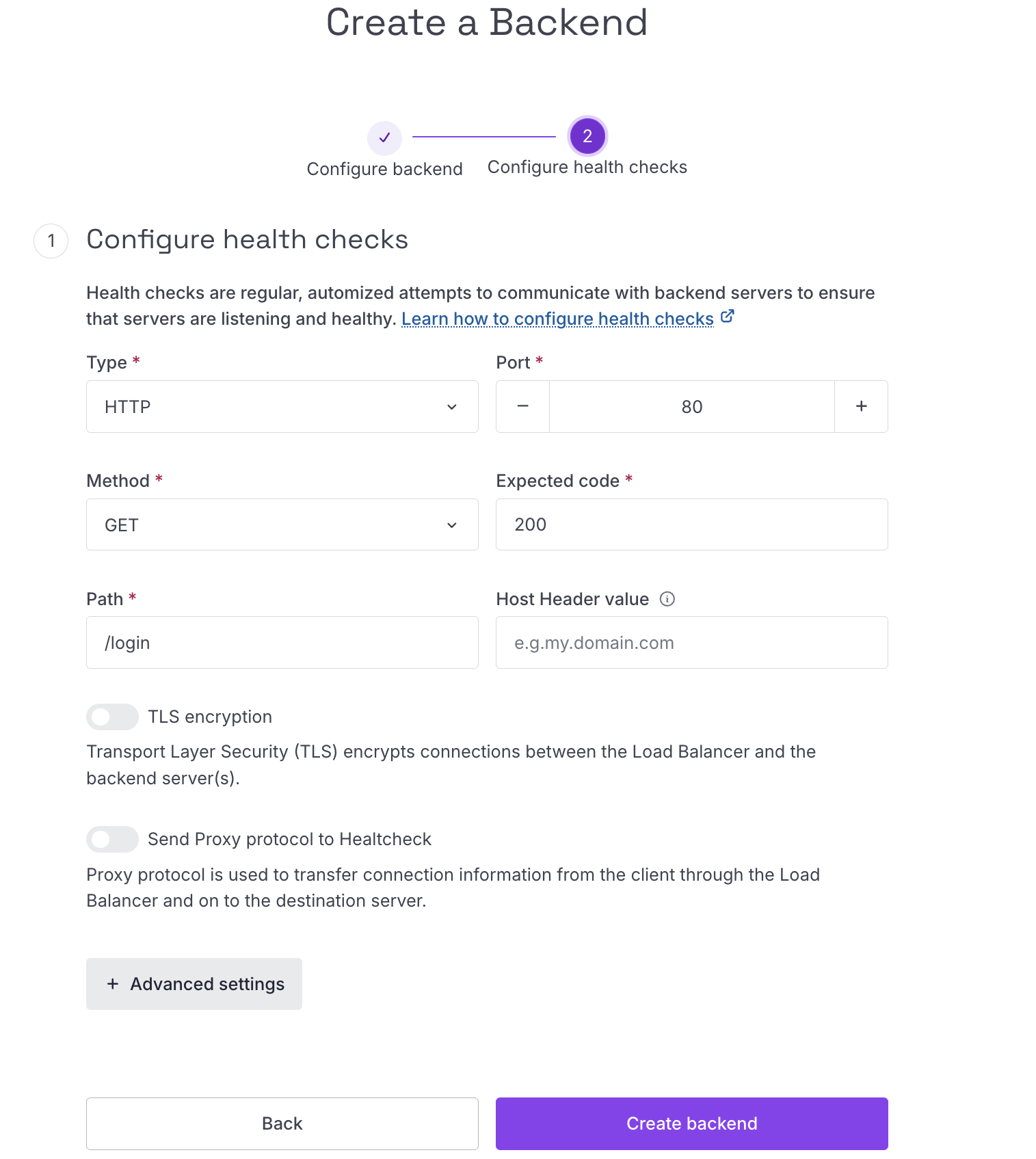
Configure the health check as follows:
- **Type**: HTTP
- **Port**: 80
- **Method**: GET
- **Expected code**: 200
- **Path**: `/login`
- **TLS encryption**: leave disabled
- **Send Proxy protocol to Healthcheck**: leave disabled
Once the backend is saved, you can monitor the health of your instance from the
**Servers** tab on the backend details page. The Load Balancer will report the
server status based on health check results.
### Create an SSL certificate
Go to the **SSL Certificates** tab and click **Create SSL certificate**. Provide
a name and choose one of two options:
- **Let's Encrypt**: provide a Common Name (your main domain name) and Scaleway
will generate the certificate automatically
- **Import certificate**: generate your own certificate using OpenSSL and paste
the full PEM-formatted certificate chain, including the public key, private
key, and optionally the certificate authorities
{{< figure src="../images/create-ssl-certificate.png" class="mx-auto max-w-130" >}}
### Add a frontend
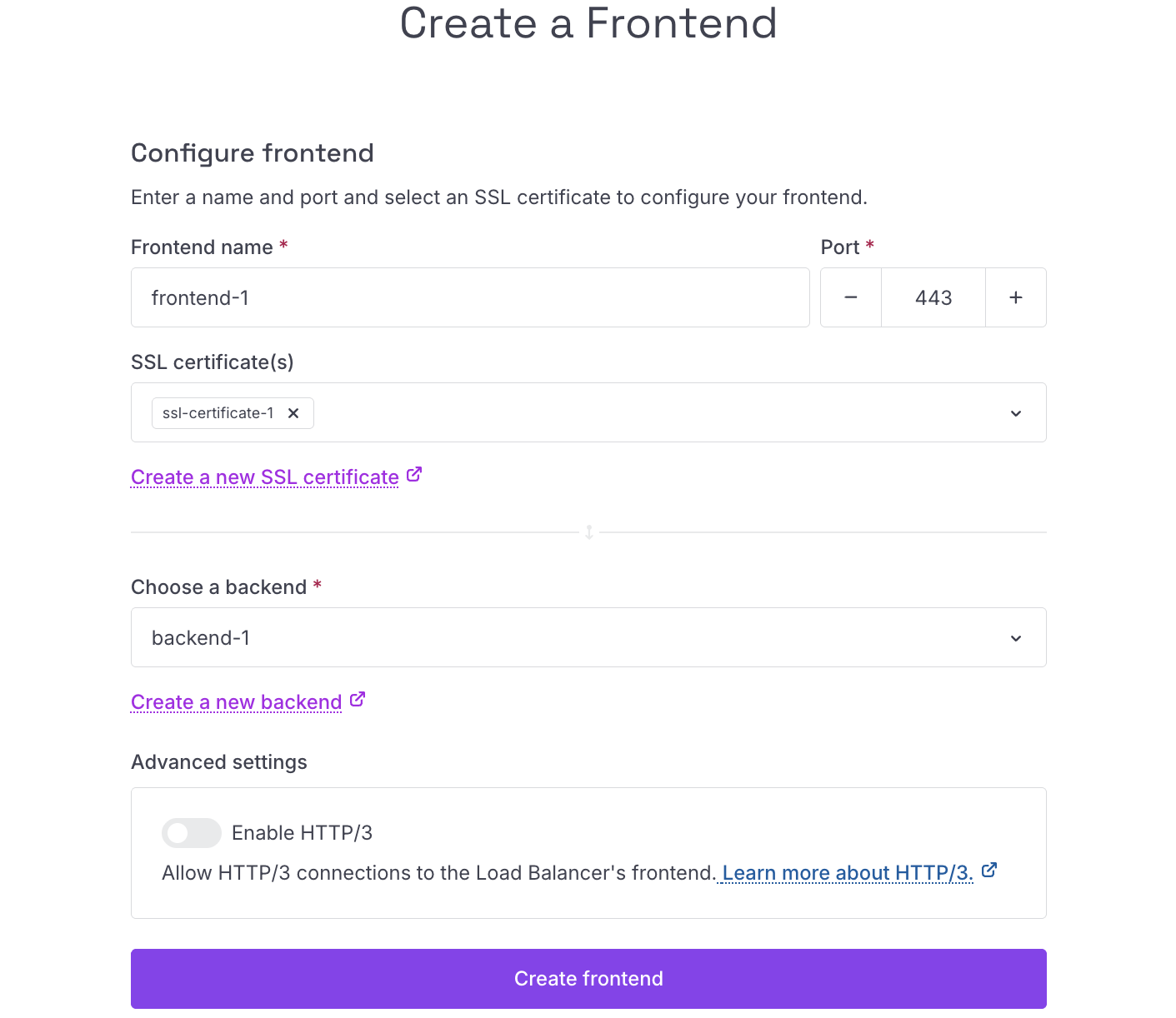
Go to the **Frontends** tab and click **Add frontend**. Configure the following:
- **Name**: provide a name for the frontend
- **Port**: 443
- **SSL certificate**: select the certificate created above
- **Backend**: select the backend created above
Click **Create frontend**. Your PCP instance is now accessible over HTTPS
through the Load Balancer.
If you prefer to keep your Load Balancer off the public internet entirely, see
[Access Plakar Control Plane via SSH Bastion](./ssh-bastion-access) for an
approach using SSH port forwarding through a bastion, with no public-facing load
balancer.
## What you have built
Your Plakar Control Plane is now running on a Scaleway Private Network with no
public IP exposed on the instance itself. A Public Gateway gives it outbound
internet access, and a Load Balancer with a valid SSL certificate handles all
inbound HTTPS traffic. The instance is reachable only through the Load Balancer,
keeping it isolated from the public internet.